Glossary
Understand key terms and concepts in this growing field, including: NACTs, NACT actors, and the lifecycle stages of nonhuman animal communication technologies.
NACTs:
Nonhuman animal communication technologies (NACTs) include any tool or system intended to assist in the translation of nonhuman animal communications or support bilateral interspecies communications. This includes, but is not limited to, AI models, machine and deep learning algorithms, large language models (LLMs), and biofeedback systems.
NACT actors:
NACT actors comprise all individuals and collectives who play roles in the design, construction, and deployment of NACTs at any stage in their lifecycle. This definition includes researchers, data scientists, data providers, engineers, funders, and experts; system designers, developers, operators, and deployers; impact assessors; organizational management; and end users.
NACT lifecycle:
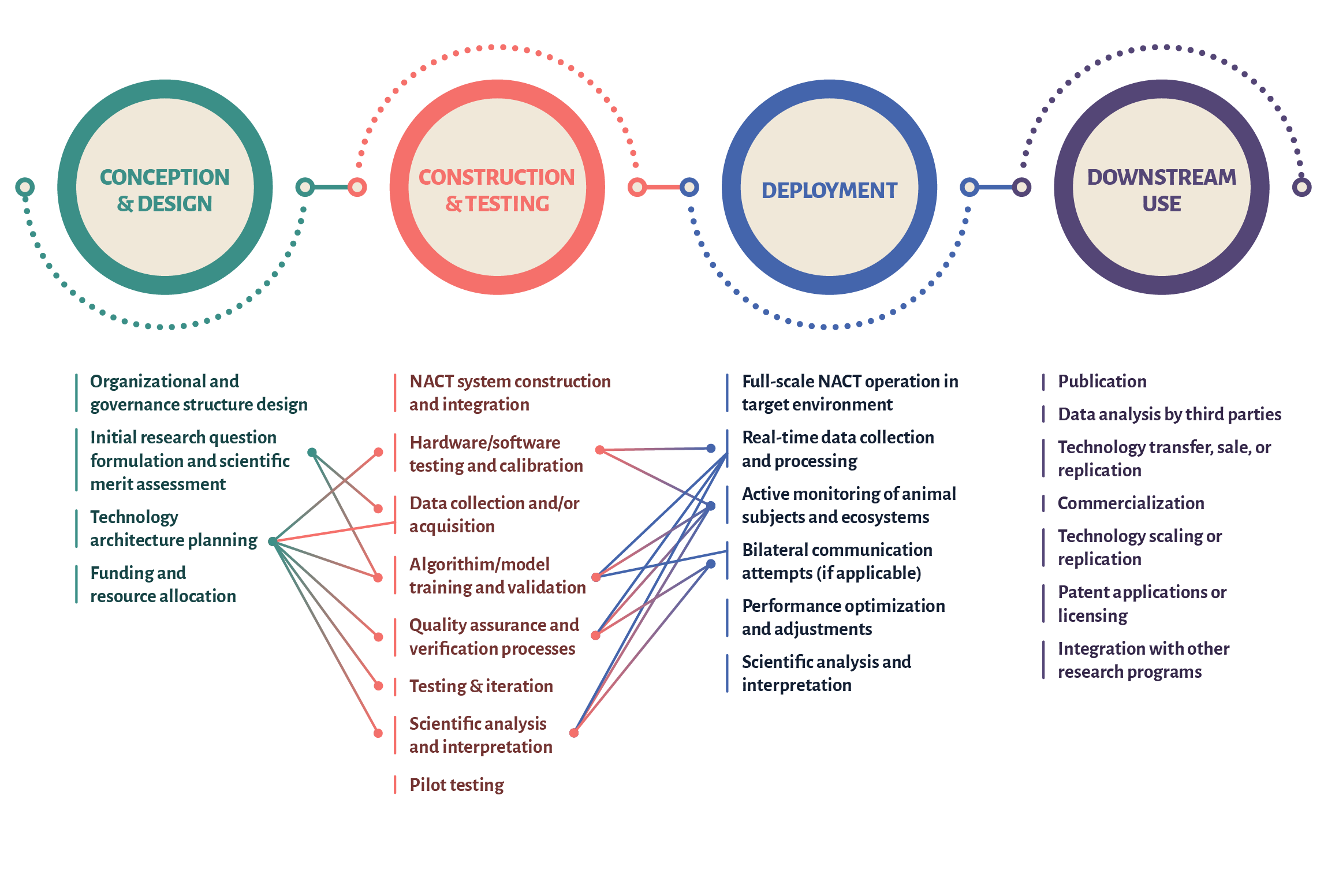
NACTs’ lifecycle encompasses the planning and design of the technology; the collection, processing, and storage of data via NACTs; the creation and deployment of NACTs, including verification and validation processes; all monitoring, impact assessment, refinement, remediation, and reporting activities; and the sale or commercialization of data or models acquired from the use of NACTs.